Stikkadoo, a safe place for children to play
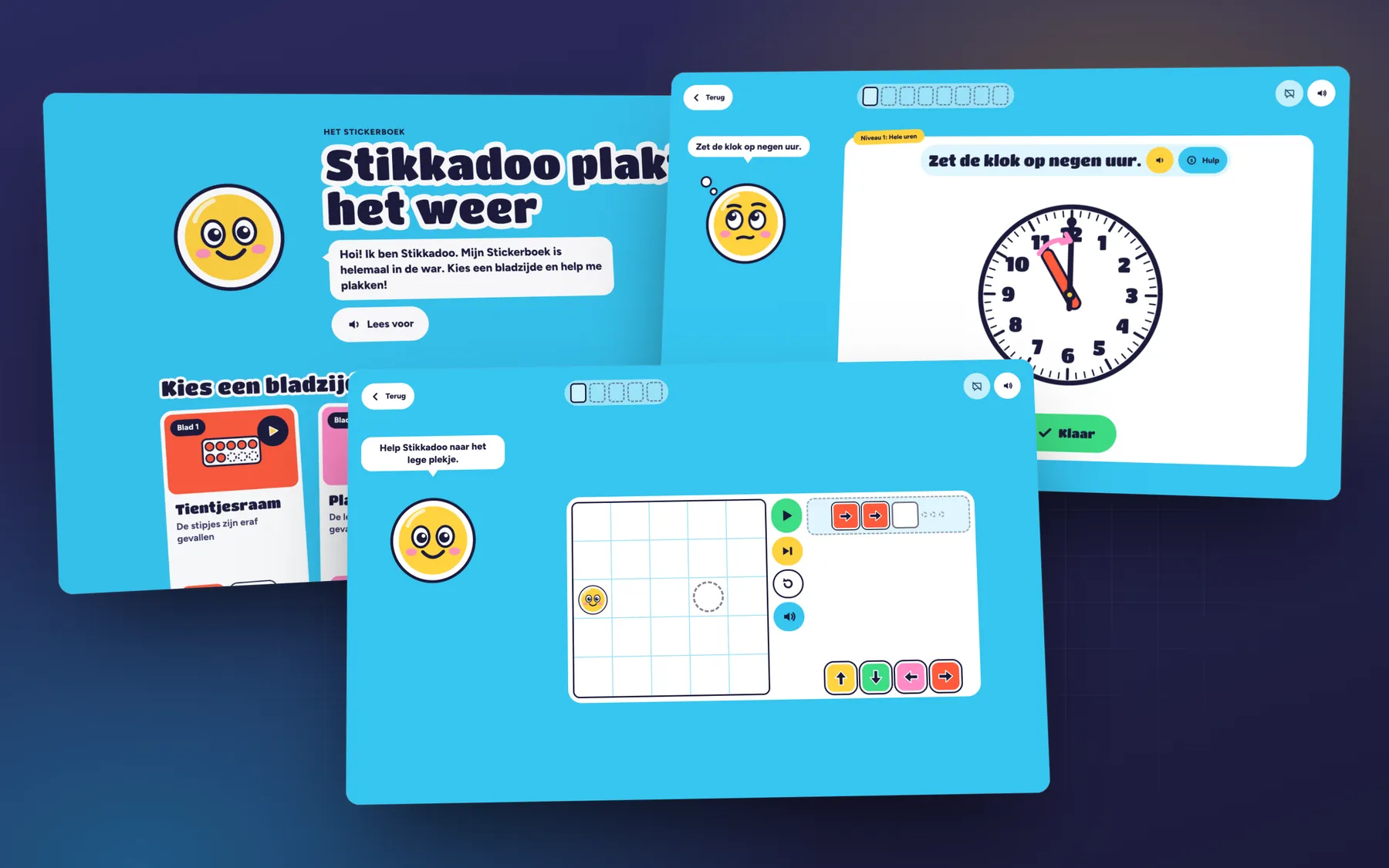
Stikkadoo is a free Dutch games site for children aged 6 to 12, at stikkadoo.nl. It wants to help make the internet a safer place for children: every game passes a strict selection first, children play without an account, and what they collect stays on their own device. Stikkadoo also has its own series of learning games, Stikkadoo plakt het weer (Stikkadoo sticks it back), in which children practise maths, spelling, telling the time, programming and sorting animals.
Why Stikkadoo
Children aged 6 to 12 play games on a tablet, a phone or a parent’s laptop, often in a short free moment. Many Dutch games sites mix casino and shooting games in with children’s games, push accounts and put ads around the game. A parent cannot tell at a glance whether it is safe.
Stikkadoo starts from that parent. Everything on the site has to be suitable for a child of six, and a parent should be able to see that in one look. The site works for a child who cannot read well yet: you choose by picture and colour, and you are playing within two taps.
A strict selection
The games come from a large network of browser games. They pass a filter on category, tags, words in the title and description, and brand names first. Violence, horror, gambling, dating and imitations of well-known brands are taken out, even when children search for them.
For the first selection, 2,947 games were dropped on title, tags and age group. After that each game was judged separately, and another 69 were dropped as unsuitable and 124 as an imitation of a brand. 1,493 games are now on the site, each with its own page.
Stikkadoo does not place any ads itself. In the games from the network there can be ads, and the site says so to parents in plain words.
Playing without an account
A child never fills in a name or email address. Favourites, progress and stickers are stored in the browser on the device itself. Every game a child plays becomes a sticker in their own album, and a full page in the album is a reason to come back.
The learning games
Besides the selection, Stikkadoo has its own series of five learning games: Stikkadoo plakt het weer. Stikkadoo is a living sticker in a sticker book, and in every game a page has got mixed up. The child helps put it back and earns a sticker for the album. The learning games contain no ads.
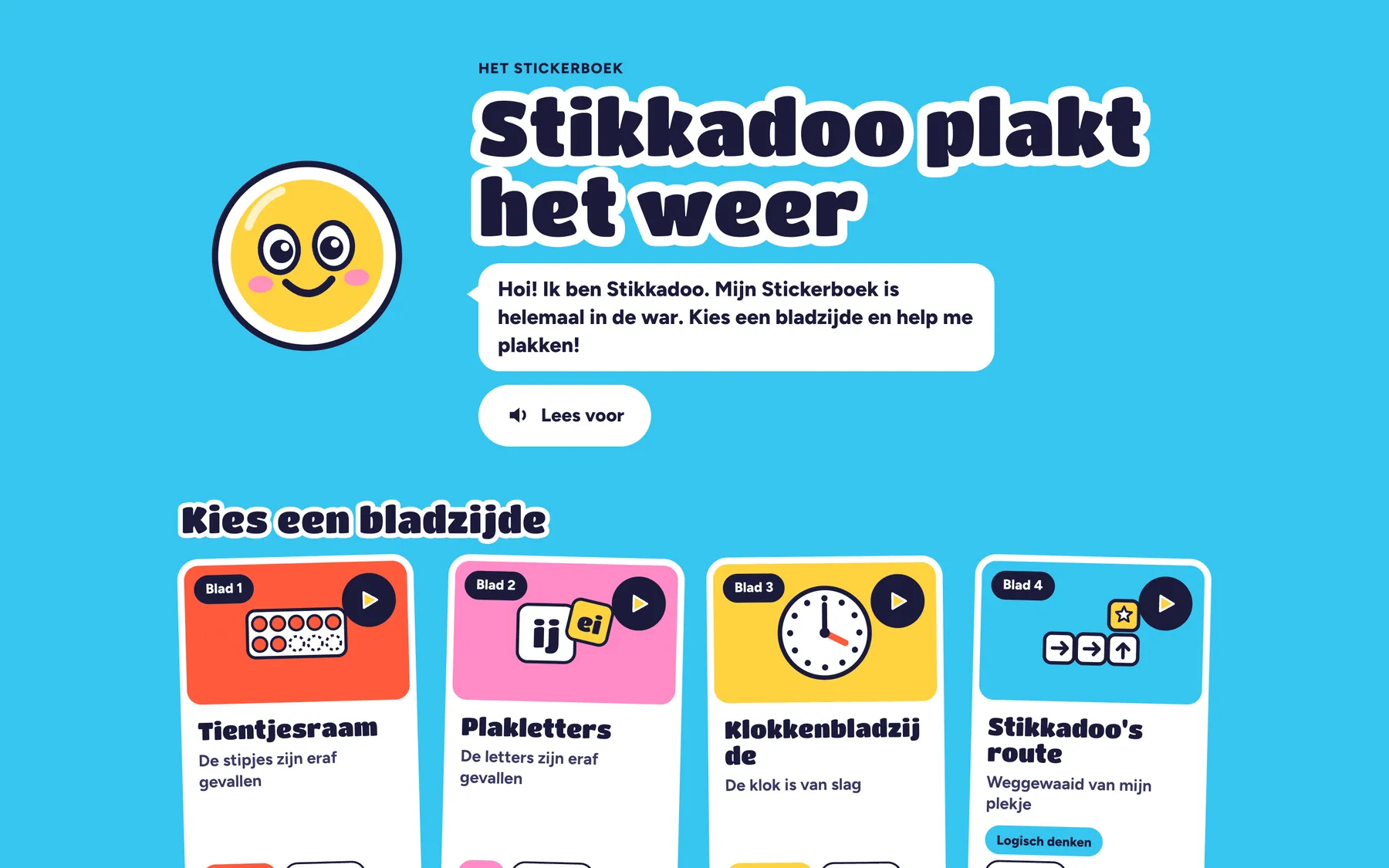
Page 1: Tientjesraam (maths, years 3 and 4)
The dots have fallen off. The child counts, makes ten and adds up to twenty with a ten-frame: first to ten, then the rest. Five levels, and after that new sums keep coming.
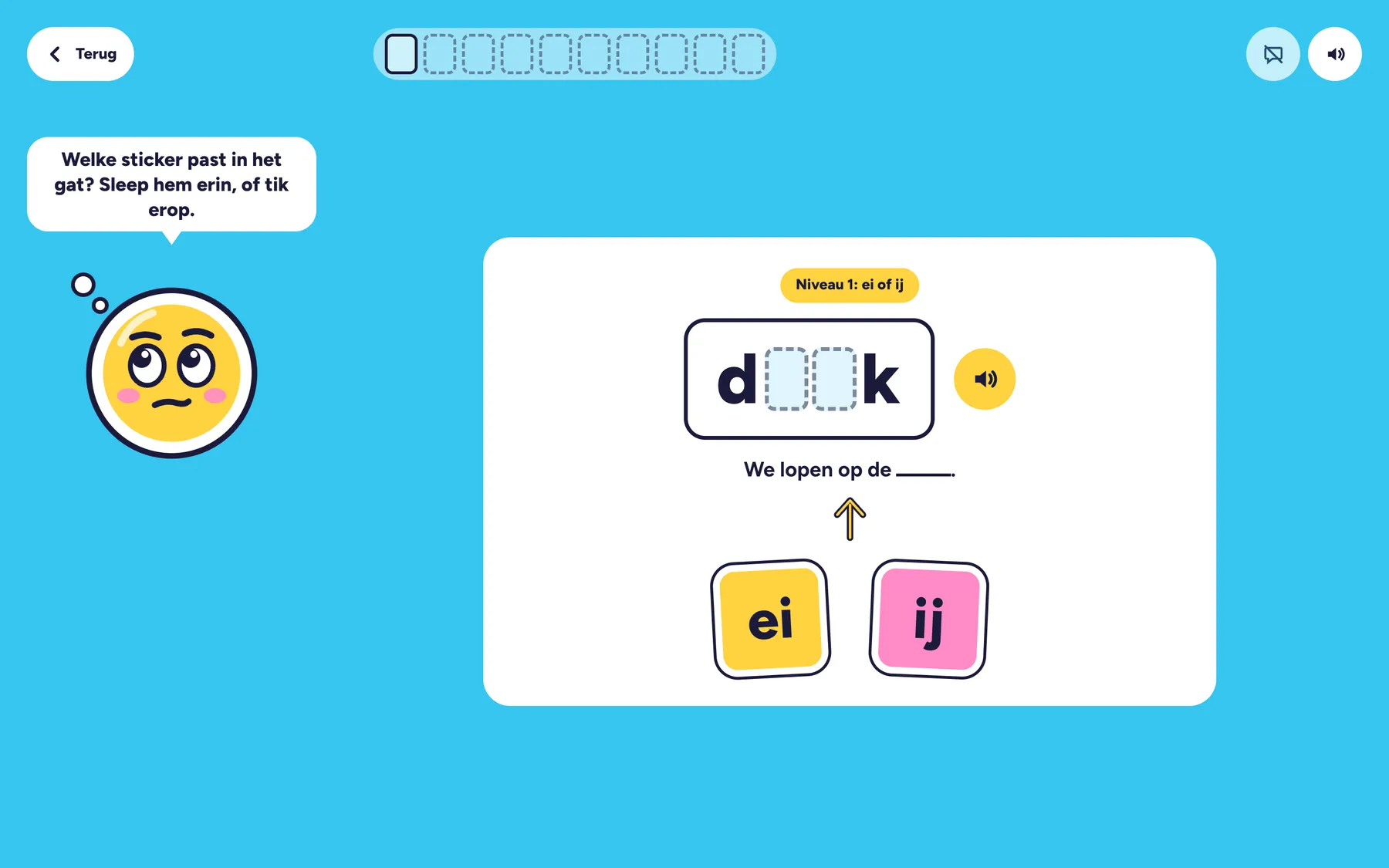
Page 2: Plakletters (spelling, years 4 and 5)
The letters have fallen off the word page. The child fills the gap with the right sticker: ei or ij, au or ou, d or t at the end of a word. Words that went wrong come back a little later.
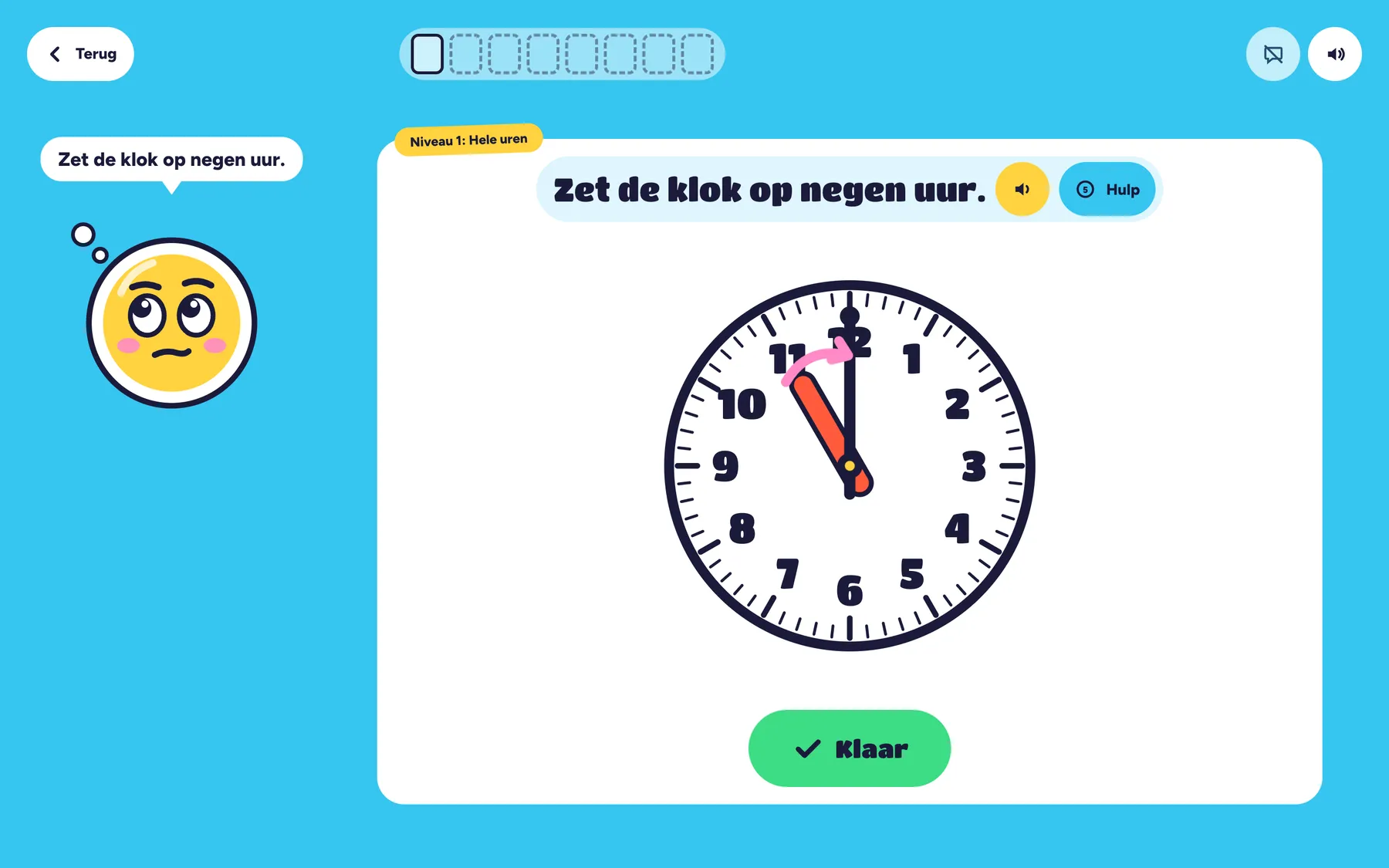
Page 3: Klokkenbladzijde (telling the time, years 4 and 5)
Stikkadoo sneezed and now all the clocks are wrong. The child drags the hands, from whole hours via half and quarter hours to the minute, on analogue and digital clocks.
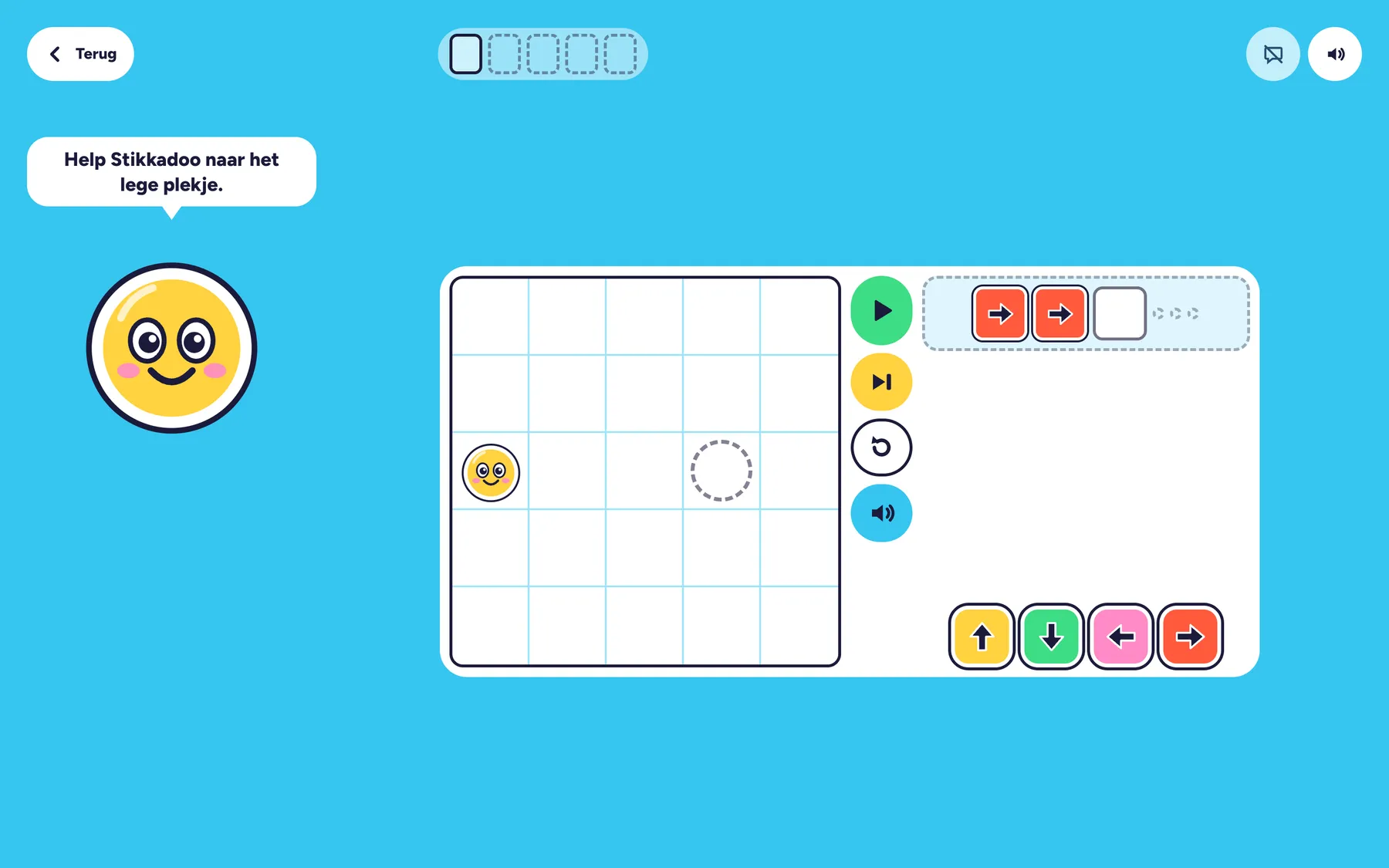
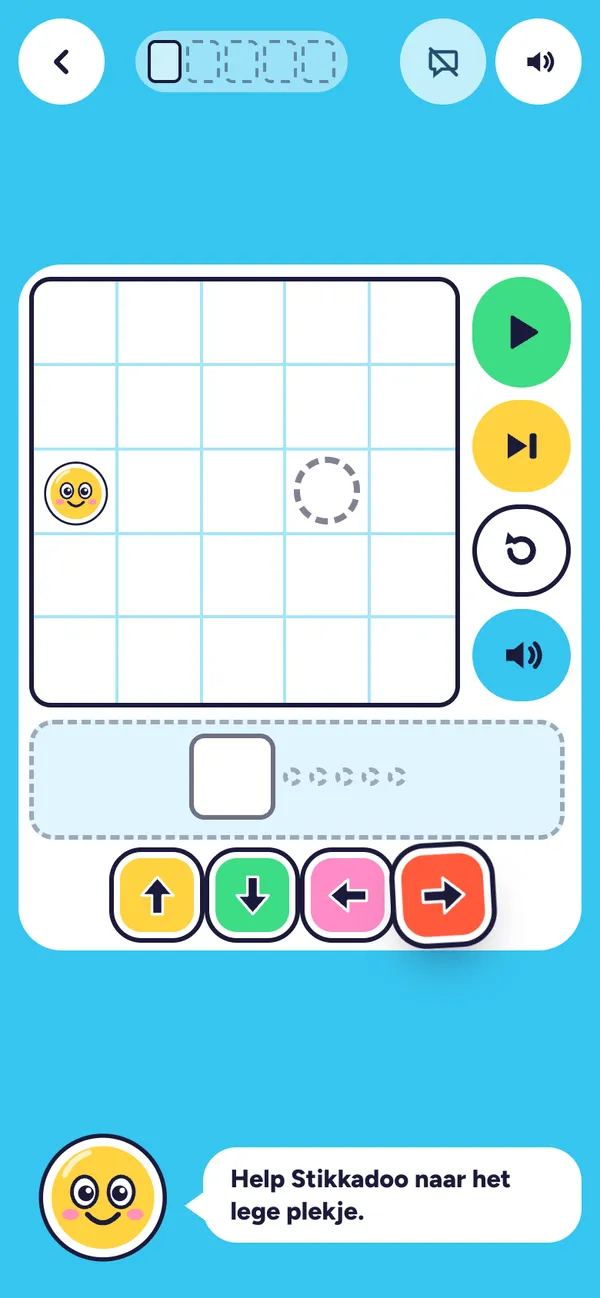
Page 4: Stikkadoo’s route (logical thinking, years 5 to 8)
“Oops! A gust of wind blew me off my spot. Will you help me back, block by block?” The child builds a small program from arrow blocks and plays it. Later come turning, repeating and finding mistakes. Seventeen levels are made by hand, and after that new ones keep coming.
Page 5: Dierenalbum (nature, years 5 to 8)
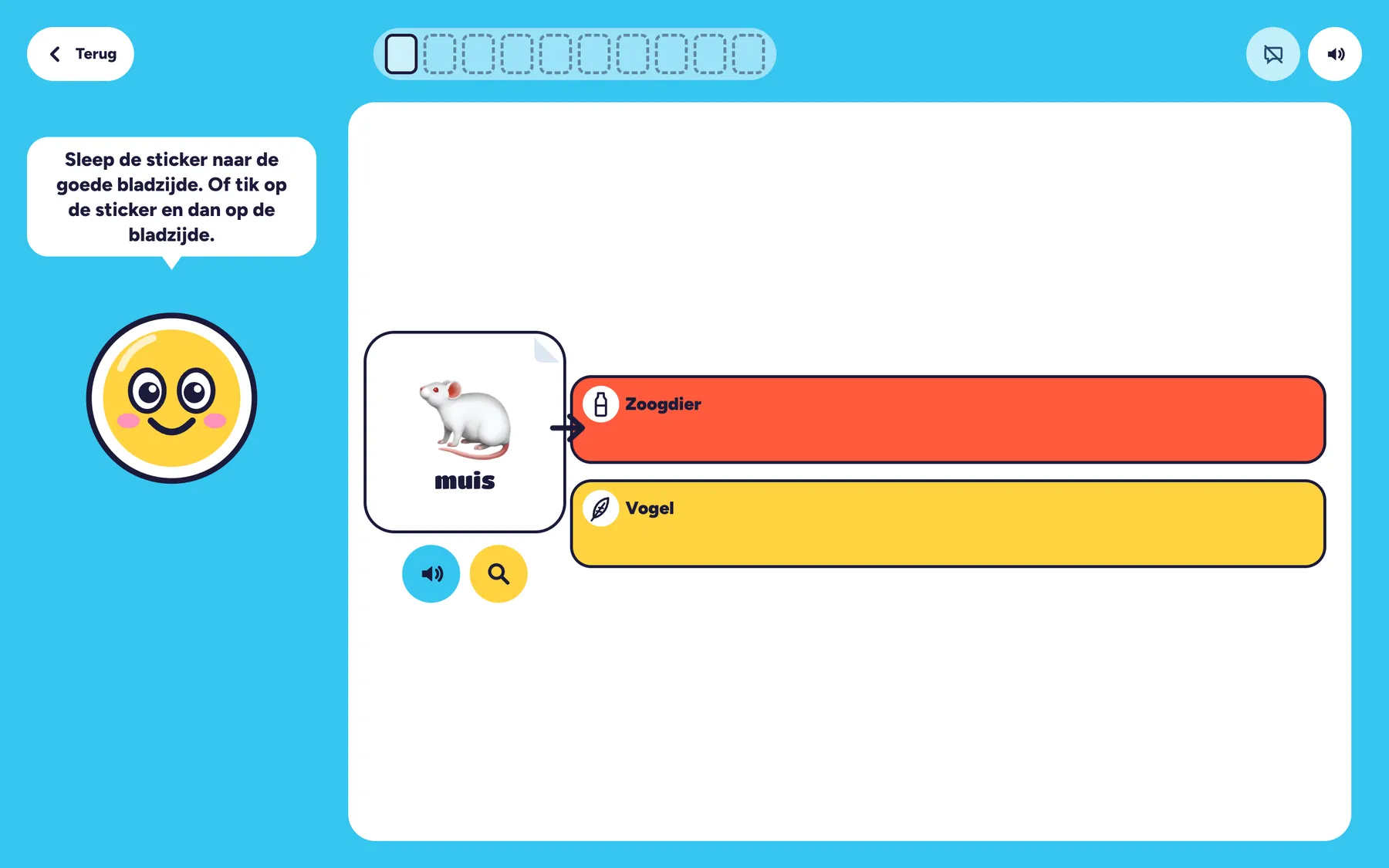
The wind blew the animal stickers out of the album. The child sorts 36 animals into six groups (mammal, bird, fish, reptile, amphibian and insect), using a card with their features.
How they teach
In the games the only thing that counts is finishing the page, and no clock is running. Research into learning games for young children shows that most of them only say right or wrong, and that children learn more slowly when a mistake costs points. So a mistake in Stikkadoo gives an explanation, after which the child gets it right themselves, and what went wrong comes back a few questions later.
Every instruction has a picture and a button that reads the sentence aloud, for children who cannot read fluently yet. The reward stays small and linked to the task: one sticker for every page finished. The subjects and school years follow what Dutch primary schools practise, and the forms are familiar from the classroom, such as the ten-frame and clocks with moving hands.
For parents and teachers
A page for parents explains in a few lines where the games come from, what happens to data and how ads work. There are also colouring pages, quizzes and themes such as Sinterklaas, Christmas and autumn. The site works on a tablet and phone with tap areas big enough for children’s hands, and can be put on the home screen like an app.
Do you want something similar for your school, library or organisation, such as a learning game that fits your lessons or an online environment where children can play safely? Read how we build apps and web applications.